




Harness solar power — charge smarter, save more
Getting more value from renewable energy means using the electricity you generate on-site — from solar PV, batteries and solar-aware EV chargers — and relying less on grid power from fossil fuels. This practical guide shows how solar panels, intelligent EV charging and energy storage work together to increase self-consumption, cut bills and reduce carbon for across Surrey, Hampshire and London. You’ll find clear technical explanations of solar charging and battery integration, hands-on tips to boost performance, the features to look for in solar-ready chargers, and a summary of 2025 UK grants and VAT rules to help make projects more affordable. We also cover commercial options — from large rooftop PV to fleet charging and energy management systems — and include checklists for installation, monitoring and maintenance. Read on for straightforward, actionable advice whether you’re planning a, a rooftop commercial system, or a combined PV + battery + EV charging installation.
How can solar panel installation help you maximise renewable energy use?
Fitting solar panels increases the share of renewables by generating electricity where it’s needed, cutting imports from the grid and raising self-consumption through direct use or local storage. PV modules convert sunlight into DC power; an inverter turns that into usable AC. Smart controls can prioritise on-site loads — for example solar PV installations or hot water — before exporting any surplus. The immediate benefits are lower energy bills, reduced operational carbon and more energy independence. Correct sizing and orientation improve annual yield, and understanding the differences between domestic and commercial projects helps decide whether to prioritise , batteries or both.
What are the benefits of residential and commercial solar PV systems?
reduce household energy bills and boost daytime self-consumption by sending rooftop generation straight to on-site appliances; they also add resilience against rising retail tariffs. For businesses, lowers operational energy costs at scale, supports sustainability targets and can increase asset value while enabling load shifting and demand-charge reduction. System size, roof area and daily load profiles determine payback and return on investment — homes generally aim for high self-consumption percentages, while commercial systems target absolute cost reductions and peak shaving. Local installers can model generation and payback scenarios to balance capital costs with for each site.
Below is a simple comparison of typical residential and system characteristics to help with planning choices.
| System Type | Typical System Size | Typical Annual Output | Typical Payback Range |
|---|---|---|---|
| Residential solar PV | 3–8 kWp | 2,500–6,500 kWh | 6–12 years |
| Small commercial PV | 10–50 kWp | 10,000–50,000 kWh | 4–10 years |
| Large commercial PV | 50+ kWp | 50,000+ kWh | 3–8 years |
The table highlights how scale affects output and payback: residential systems focus on maximising self-consumption, while commercial arrays prioritise total cost reduction and operational savings.
How do you optimise solar panel efficiency and maintenance?
Good performance starts with site choice: avoid shading, pick the right tilt and orientation, and select modules and inverters suited to your roof and local climate. Regular checks — visual inspections, cleaning when soiling reduces output, and inverter health checks — help keep systems near peak. Monitoring systems provide real-time alerts for faults or underperformance. Avoid common pitfalls such as partial shading on a string, undersized inverters or poor cable routing to protect long-term yield and safety. For high-voltage work and firmware updates, use certified electrical contractors so warranties and reliability are preserved.
How does EV charger installation with solar integration maximise your renewable energy?
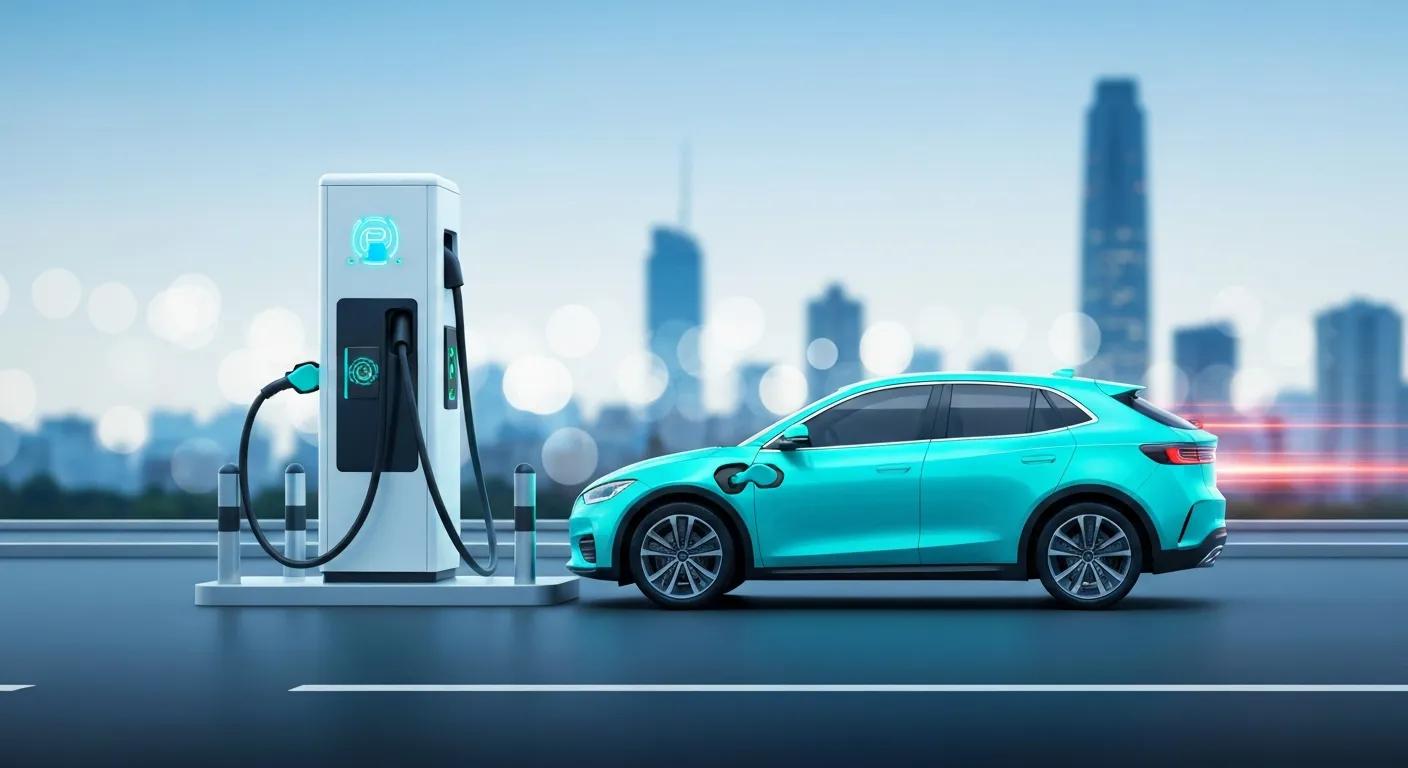
Adding EV chargers to a solar PV system directs locally generated electricity into vehicle charging, cutting grid use and emissions. At peak solar output, smart chargers divert surplus PV to the car instead of exporting it, increasing on-site consumption. This is most effective when combined with scheduling that matches driving habits and time-of-use tariffs, and when batteries are available to supply charging during low-sun periods. Knowing solar PV installations and integration options helps homeowners and fleet managers pick solutions that deliver real cost and carbon savings.
What are the key features of solar-compatible EV chargers?
Solar-compatible chargers offer functions that enable safe, efficient use of on-site generation. Common features include solar diversion (prioritising PV energy), dynamic load balancing (preventing household overloads), scheduling and tariff integration (for time-of-use optimisation), and app controls for monitoring. Domestic chargers usually emphasise simplicity and solar diversion, while commercial and fleet units focus on higher power, multi-point load management and EMS integration. The right feature set depends on your generation profile, vehicle use and whether you’ll add battery storage or an energy management system.
| Charger Type | Key Feature | Ideal Use-Case |
|---|---|---|
| Solar diversion charger | Prioritises PV for charging | Homeowners with daytime solar generation |
| Dynamic load balancing charger | Adjusts power across circuits | Properties with limited supply capacity |
| Tariff-aware smart charger | Schedules charging by cost | Businesses on time-of-use tariffs or EV fleets |
This quick comparison helps match solar diversion to needs: solar diversion to maximise green charging, load balancing for safety, and tariff awareness for cost control.
How does smart EV charger integration reduce charging costs and carbon footprint?
Smart chargers lower costs and emissions by using the cleanest, cheapest energy available in real time — first solar, then stored battery energy if available, and finally grid power when needed. Typical operation charges from solar during the day, uses battery energy when sunlight falls, and schedules non-urgent charging overnight on low tariffs. Households that shift 50–70% of charging into daytime solar can see an equivalent reduction in grid charging, reducing CO2 and running costs. Continuous monitoring and automation keep charging aligned with energy availability and usage patterns for ongoing solar pv installations.
What energy storage solutions can enhance your renewable energy usage?
Energy storage captures surplus solar for later use, reducing low-value exports and boosting self-consumption during evenings and peak demand. Batteries charge and discharge under an energy management system or battery inverter, smoothing supply, enabling load shifting, providing backup and supporting demand response. Homes typically choose compact lithium‑ion units sized for evening loads, while commercial sites use larger modular systems for peak shaving and resilience. Choosing the right capacity, efficiency and integration approach makes storage deliver predictable financial and operational benefits.
How do battery storage systems work with solar PV and EV chargers?
Batteries coordinate with PV and EV chargers so that PV generation first supplies immediate loads and charges the battery; excess charges the battery, and stored energy later feeds the home or an EV charger when solar drops. Inverters convert DC battery energy to AC and manage bi-directional flows, while control software prioritises backup, self-consumption or peak shaving according to your settings. Round-trip efficiency, depth-of-discharge and cycle behaviour determine usable capacity and how often storage can cover evening EV charging or outages. Proper sizing must consider daily generation and driving energy needs to meet solar PV installations.
| Battery Option | Typical Capacity (kWh) | Round-Trip Efficiency | Typical Application |
|---|---|---|---|
| Small home battery | 5–10 kWh | 85–95% | Evening load shifting, partial EV charge |
| Medium commercial battery | 20–100 kWh | 85–95% | Demand charge reduction, fleet support |
| Large modular storage | 100+ kWh | 80–90% | Backup power, grid services, large-scale shifting |
The table shows how capacity and application differ between home and commercial storage, and that larger systems enable broader operational benefits.
What are the benefits of home and commercial energy storage solutions?
Home storage increases solar self-consumption, provides emergency backup and smooths household demand to reduce peak imports — delivering predictable bill savings and resilience. Commercial storage often offers stronger financial returns through peak demand reduction, demand-charge management and finer control over load profiles — benefits that scale with system size and EMS integration. Both use intelligent controls to direct flows for maximum economic return or resilience, and monitoring helps preserve battery life. Pairing storage with solar pv installations increases renewable use by aligning vehicle charging with stored or generated green energy.
Which renewable energy grants and incentives are available in the UK for 2025?
In 2025 several UK incentives and tax rules can improve affordability for batteries and EV chargers. Key measures include targeted grant schemes and favourable VAT treatment on some energy-saving installations, which can lower upfront costs or provide direct support. Eligibility often depends on property type, energy efficiency and whether the work forms part of a wider retrofit, so early checks and accurate documentation are essential. Accredited installers can help with paperwork, guidance and timing to make sure projects meet scheme requirements and capture available benefits.
What government schemes support solar panel and EV charger installations?
Relevant 2025 schemes and tax provisions typically target household and business energy efficiency and low-carbon infrastructure; some provide grants or funding for renewable installations. These include targeted retrofit grants, local authority programmes that subsidise eligible installs, and VAT reliefs that may apply to certain products and work. Scheme rules change frequently, so check official guidance and prepare documentation early. Working with an who understands the criteria simplifies applications and compliance.
Key steps to apply usually include the following.
- Check homeowner or business eligibility against scheme rules.
- Gather required documents, such as proof of ownership and EPC ratings.
- Work with a certified installer to provide technical quotes and evidence.
Following these steps gives a practical route to identify funding and complete applications accurately and on time.
How can you apply for grants and benefit from 0% VAT on renewable energy products?
Grant applications generally require documentation — property proof, a recent EPC and detailed installer quotes — and may need adherence to deadlines or retrofit sequencing rules. For VAT relief, confirm which products and installation work qualify under current HMRC guidance; installers usually apply the correct VAT treatment on the invoice once eligibility is confirmed. Professional installers can verify eligibility, prepare technical specifications and submit forms, reducing the administrative burden. If you’d like help navigating grants and VAT, can provide a free consultation to check eligibility and advise next steps.
How can commercial solar PV systems and energy management maximise business renewable energy use?
Commercial PV paired with energy management increases business renewable use by combining on-site generation with analytics-led controls to cut energy spend, manage demand and support decarbonisation targets. Large-scale PV covers significant daytime loads, while an EMS coordinates storage, fleet charging and load shifting to lower peak demand charges and improve operational efficiency. can also access financing options and support sustainability reporting, so renewable investments can improve both costs and reputation. Planning should include a clear business case, site surveys and energy modelling to match system capacity with operational needs and financial goals.
What are the advantages of large-scale solar and fleet EV charging for businesses?
Large-scale solar reduces electricity procurement costs and hedges against price volatility by supplying low-marginal-cost generation during daylight. Fleet EV charging powered by on-site PV or storage cuts fuel and maintenance costs and streamlines operations through centralised energy management and scheduling. Businesses also gain verified emissions reductions and sustainability credentials useful for tenders and reporting. A depot scenario where daytime generation covers a large share of charging shows how can lower fleet energy bills and reduce peak demand penalties.
How do energy management systems optimise renewable energy for commercial clients?
Energy Management Systems (EMS) optimise renewables by forecasting generation and demand, automating battery and charger decisions, and using demand response to reduce grid costs. Key EMS features include short-term PV forecasting, tariff-aware scheduling, real-time load control and integration with building management systems to shift non-critical loads. Commercial EMS deployments deliver measurable results — reduced demand charges, smoother load profiles and higher on-site generation use. Defining KPIs such as kWh shifted, peak kW reduced and cost savings lets businesses measure performance and refine strategies for ongoing improvement.
What are the best practices to maximise renewable energy use at home and work?
Best practice combines sound system design, intelligent controls and sensible user habits. Right-size PV for expected consumption, pair it with appropriate battery capacity and choose with load management to create a cohesive system that prioritises on-site green generation. Regular monitoring, firmware updates and preventative maintenance keep performance and safety high. Finally, adapt behaviour — charge vehicles during sunny periods, run appliances midday and use time-of-use tariffs — to complement technical measures and maximise renewable share and savings.
How can you combine solar, EV charging and battery storage for maximum savings?
Combining solar, EV charging and storage works best when systems are sized and controlled to match generation with consumption. Model daily generation against household use and driving needs, size PV to create daytime surplus, choose battery capacity for evening peaks, and pick a and scheduling. An energy management controller can automate flows: PV to immediate loads, PV to battery, battery to EV or home, and grid only for residual needs. When design, controls and behaviour align, self-consumption rises and payback shortens.
To turn these ideas into practical steps, follow this checklist:
- Assess consumption and driving profiles to set realistic sizing targets.
- Prioritise solar for daytime charging and use batteries for evening vehicle top-ups.
- Use automated scheduling and monitoring to keep systems optimised without manual effort.
These steps convert design principles into everyday habits so systems deliver reliable savings and emissions reductions.
What role do smart tariffs and energy management play in renewable energy optimisation?
Smart tariffs and an EMS connect consumption with low-cost or high-solar periods, enabling load shifting and lowering overall energy spend. Time-of-use tariffs reward moving discretionary loads — like EV charging or laundry — to off-peak or sunny windows, and export/import prices influence whether to store or export surplus. An EMS that understands tariffs and generation forecasts can automate charging and battery use to minimise costs. Users and businesses that combine tariff-aware scheduling with monitoring see the biggest gains in bills and renewable use.
For practical action, try these :
- Register for a smart meter where available and review tariff options.
- Configure chargers and EMS to favour solar and low-tariff windows.
- Check performance periodically and update schedules as habits change.
Downlight Electrical Ltd supports domestic and commercial clients across Surrey, Hampshire and London with EV charger installations and can help check grant and VAT eligibility. For homeowners and businesses needing system design, surveys or application support, Downlight Electrical Ltd offers local, client-focused site assessments and no‑obligation consultations to review options. If you’d like tailored advice or a survey to estimate renewable generation and savings, or book a free consultation with our local team.
Conclusion
Using solar power together with smart EV charging and battery storage raises self-consumption, lowers bills and cuts carbon — while improving resilience. Understanding how these technologies integrate helps homeowners and businesses choose solutions that meet their sustainability and financial goals. To explore practical options and see how much you could save, with our local experts and start moving towards a greener, more cost-effective future.