
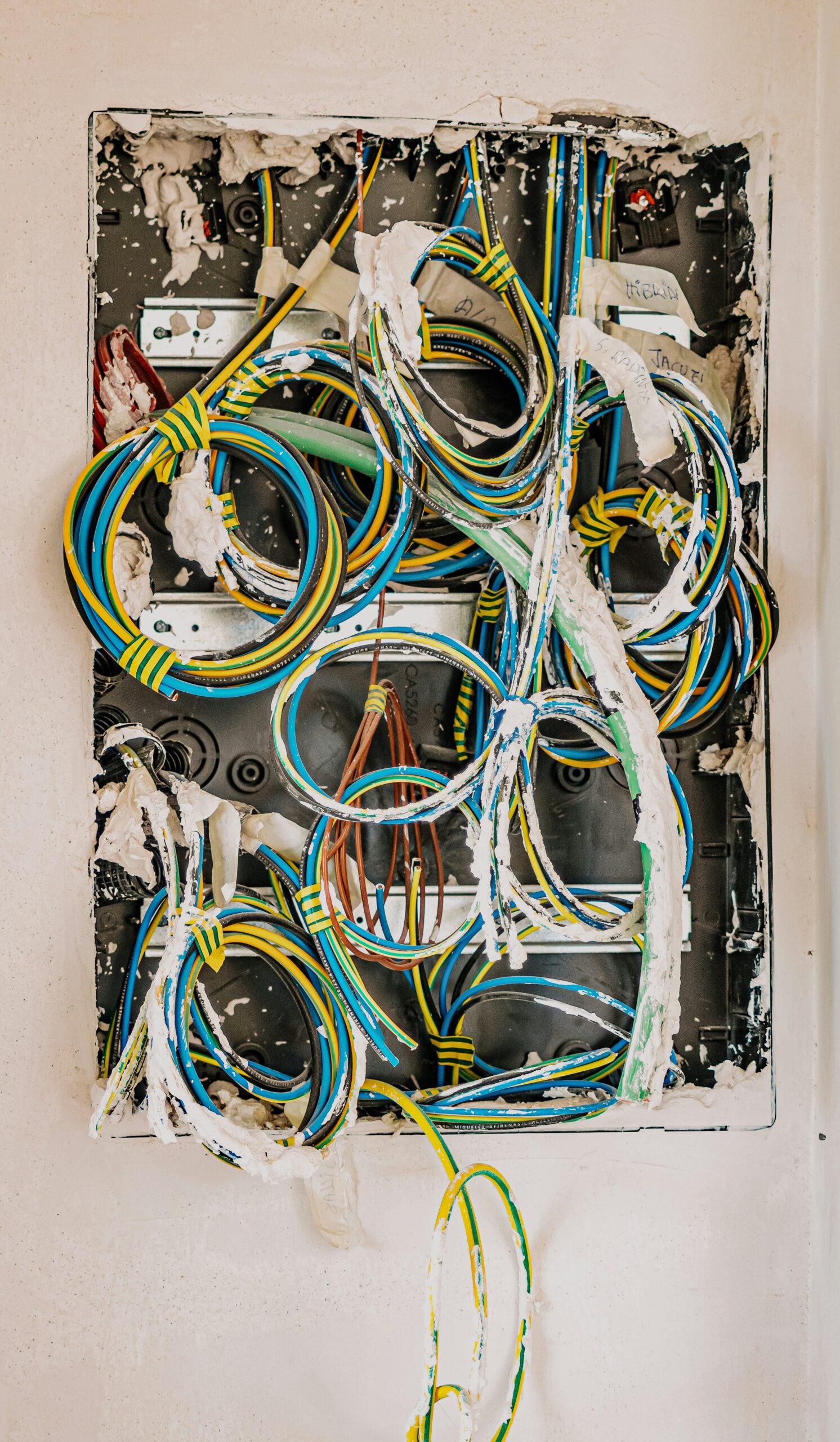






Rewiring costs: What to expect in the UK
Electrical rewiring is the replacement of a building’s internal wiring, consumer unit and protective devices so the installation is safe and able to cope with modern use. This guide sets out why rewires are carried out, how electricians price work for domestic and commercial properties, and how standards such as BS 7671 and Part P influence scope and cost. Many homeowners and business owners worry about budget, disruption and compliance when planning a rewire; here you’ll find clear local price ranges, realistic timescales and practical tips to avoid surprises. We cover typical cost bands for 1–5 bedroom properties, regional uplifts for Surrey, Hampshire and London, the main cost drivers, warning signs that a rewire is due, and the usual process from survey to certification. We also explain full electrical rewires and what testing and paperwork — like an EICR — involve. Use the tables and checklists below to estimate your budget and prepare for the job.
What is electrical rewiring and why it matters
Rewiring means removing old or unsafe cables and fitting new circuits, sockets, switches and protective equipment. The work replaces degraded conductors, upgrades the consumer unit and ensures correct earthing and bonding so protective devices operate as intended — reducing the risk of fire and electric shock. The main benefits are improved safety, extra capacity for modern appliances and fewer nuisance trips, all of which make a home more comfortable and often more attractive to buyers. Understanding the technical scope helps you choose between a full or partial rewire and prepares you for the disruption and cost variations tied to labour, materials and access. Local electricians can clarify quotes and compliance; Downlight Electrical Ltd, based in Fleet, Hampshire, aims to offer transparent prices, reliable workmanship and a client-focused approach to help you decide with confidence.
Full vs partial rewires — what they involve
A full rewire replaces all fixed wiring and the consumer unit. It typically includes new circuit runs, sockets, switches and earthing, followed by testing and certification. Full rewires are common when wiring is obsolete, badly damaged or the property is being extensively refurbished. Work usually comes in two stages: first fix (cables and back boxes) and second fix (fittings and finishes), with plaster repairs where needed. A partial rewire targets specific circuits or areas — for example, a kitchen circuit or a consumer unit upgrade. It’s less invasive but may not resolve wider safety issues.
Timescales vary: a small partial rewire can be completed in a few days, while a full rewire of an average three-bedroom house typically takes one to two weeks, plus any plastering and redecorating time.
Why a rewire is worth it
A rewire restores safety by ensuring protective devices operate correctly and that earthing and bonding meet current standards, significantly lowering the risk of fire and electric shock.
It also increases capacity, so you can add modern appliances, EV chargers and smart systems without overloading circuits — a practical way to future-proof your home.
A properly documented rewire, finished with an EICR and an upgraded consumer unit, gives buyers, tenants and insurers confidence and can help with resale. Modern wiring also reduces nuisance faults such as tripping and flickering, cutting ongoing repair bills and call-outs.
Average house rewiring costs in the UK (by property type)
Below are national cost bands for common property sizes, with local adjustments for Surrey, Hampshire and London where labour and material costs are often higher. The table gives a quick reference to typical ranges and a regional uplift reflecting South East market conditions. After the table we explain what’s usually included or excluded and how quotes are commonly structured.
| Property Type | Typical Cost Range (UK) | Typical Cost Range (Surrey/Hampshire/London) |
|---|---|---|
| 1-bedroom flat | £3,000 – £4,800 | £3,500 – £5,800 |
| 2-bedroom house | £3,500 – £5,800 | £4,000 – £6,500 |
| 3-bedroom house | £4,450 – £8,000 | £5,000 – £9,000 |
| 4-bedroom house | £6,080 – £9,380 | £6,500 – £10,000 |
| 5-bedroom house | £7,500 – £12,500 | £8,000 – £12,000 |
These bands are representative: regional ranges factor in labour and travel uplifts that can add 5–20% depending on postcode and job complexity. Most quotes include labour, a standard consumer unit and wiring to a typical number of sockets and lighting circuits. Extras such as premium switches, extensive surface mounting, trunking or full plaster repairs are often excluded and charged separately. Downlight Electrical Ltd provides transparent, competitive quotes across Surrey, Hampshire and London and usually recommends an on-site survey (often free or low-cost) to confirm scope and supply an itemised estimate. Knowing what’s included in a quote helps avoid surprises and keeps your budget accurate.
Typical costs by bedroom count
Prices rise with room count, circuit numbers and expected labour. Smaller properties need fewer circuits and less time for first and second fix. For example, a 1-bedroom flat rewire often covers a single ring or radial circuit and basic lighting, while a 3-bedroom house usually requires multiple ring circuits, dedicated kitchen and shower circuits, and an upgraded consumer unit. Quotes should itemise labour, materials, consumer unit, testing and certification — check for exclusions like re-plastering or decorator work.
As a practical example, a mid-range three-bed rewire in the South East might include a new 18th-edition-compliant consumer unit, three ring circuits, lighting circuits and standard sockets within the mid-band price.
Regional differences: Surrey, Hampshire and London
Differences come from labour rates, travel/time costs and local demand. London usually shows the highest uplift, followed by Surrey and then Hampshire, where rates can be lower outside commuter belts. Expect roughly a 5–15% uplift across Surrey/Hampshire versus national averages, and 10–25% in many London boroughs because of higher labour costs and parking/access issues. Other local factors include access constraints in terraced London properties, conservation-area permits and congestion-related delays. Downlight Electrical Ltd operates from Fleet, Hampshire and factors local logistics into clear, realistic quotations and survey advice.
What affects the cost to rewire a house or commercial property?
Cost depends on technical scope and logistics: property size and circuit count determine material and labour; age and wiring condition influence remedial work. Accessibility affects time spent chasing-in or working in tight spaces and can add significant labour. Chosen finishes and fittings change material costs. Additional upgrades such as consumer unit replacement, EICR testing, EV charger provision or smart system integration add fixed costs and complexity. Understanding these drivers helps you prioritise work and choose between full and partial rewires based on safety and budget.
| Factor | How it affects cost | Example / typical variation |
|---|---|---|
| Property size / circuits | More labour and more cable | Each extra circuit can add hundreds of pounds |
| Age / condition of wiring | May need extra remedial work | Victorian walls may need chasing or refitting, adding 10–30% |
| Accessibility | Hard access increases labour time | Solid walls or no loft access typically add 10–25% |
| Fittings / finishes | Premium items raise material costs | Premium trim can add several hundred pounds |
| Regulatory upgrades | Consumer unit or EICR costs increase the total | New consumer unit and certification often included in mid-range quotes |
To manage costs, prioritise safety-critical items and ask for an itemised survey and quote. That approach reduces hidden extras and makes clear which upgrades are necessary versus optional.
How size, age and location change the price
Larger homes need more cable runs, extra circuits and longer labour schedules, so costs rise with floor area and room count. Older properties often hide degraded wiring such as fabric‑insulated or aluminium conductors and may need remedial rerouting or wall chasing, increasing labour and finishing costs. Location affects local labour rates, travel time and logistical complexity — urban sites can add parking and permit constraints that raise costs. Two similar houses in different areas can therefore show very different quotes; always compare like-for-like scopes.
The role of access, wiring condition and fittings
Access and wiring condition determine onsite effort and any special techniques required, such as chasing into solid walls or using surface trunking when plastering isn’t an option. Poor wiring increases testing and fault-finding time and may push a partial rewire towards a full rewire. The consumer unit, sockets, switches and decorative finishes you choose affect material and installation time, with smart or high-end fittings costing more. Ask contractors to include options in the quote — standard vs premium fittings, phased works or minimally invasive routes — so you can control final cost and match work to your budget.
How can you tell if your property needs rewiring?
Recognising signs of old or faulty wiring helps you decide when to inspect and act. Common indicators range from visible damage such as discoloured outlets to behavioural symptoms like frequent tripping or flickering lights, and smells or warm sockets that point to dangerous conditions. Regular inspections and EICRs provide the evidence you need, with recommended intervals and escalation triggers for homes and rental properties. Early detection prevents bigger problems and higher costs; the checklist below summarises the main warning signs and risk levels.
- The following signs suggest wiring problems and mean you should get an inspection: Lights that flicker or dim when appliances start — a possible sign of overload or loose connections. Frequent tripping of circuits or blown fuses — indicating overloaded or failing circuits. Discoloured sockets, burning smells or warm outlets — immediate safety concerns needing urgent attention.
These issues vary in urgency: persistent burning smells or warm outlets are high-risk and need immediate disconnection and inspection. Intermittent flicker usually starts with an inspection and planned repairs.
More signs of outdated or faulty wiring
Old wiring can show brittle insulation, discoloured switches or sockets, and repeated nuisance faults like tripping RCDs or fuses. Behavioural signs include lights dimming when large appliances start, sockets getting warm under normal use, and a burning or plastic smell near outlets — all warning signs of unsafe conditions. Certain older wiring types, such as fabric‑insulated cable, typically fail current standards and call for an EICR or full survey.
Spotting these signs early allows a measured response: arrange an inspection, get an EICR, and plan remedial work before problems worsen.
How often should a property be inspected or rewired?
A regular inspection routine reduces long-term risk. Homeowners are commonly advised to get an Electrical Installation Condition Report (EICR) every 10 years; landlords often need checks every 5 years or at each tenancy change — these intervals reflect regulatory expectations and insurance guidance. Rewiring isn’t only a time-based decision: many installations remain serviceable beyond standard intervals if maintained and pass successive EICRs, while others need earlier replacement due to condition or changed use. Increase inspection frequency after any fault, when tenancy changes, or during major renovations that expose wiring. Proactive inspections limit emergency costs and support the paperwork needed for sales and lets.
What to expect from the rewiring process
A typical rewiring job follows clear stages: survey and quote, planning and scheduling, first fix (routing and cabling), second fix (fittings and consumer unit), testing and certification, then handover. Each step ensures compliance with BS 7671 and gives the client visible milestones. Timescales vary with property size and scope. Contractors usually provide itemised quotes and explain disruption‑management measures such as phased works or temporary supplies. Understanding the process sets realistic expectations around access, dust, plastering and the paperwork you’ll receive on completion, like an EICR and completion certificate.
- Survey and Quotation: An on-site inspection that leads to an itemised quote and agreed scope.
- Planning and Preparation: Scheduling work, ordering materials and arranging any permissions or notices.
- First Fix: Installing cable runs and back boxes — the dustiest stage.
- Second Fix and Finishes: Fitting sockets, switches and the consumer unit, plus cosmetic repairs.
- Testing and Certification: Full electrical tests, EICR or completion certificate and handover documentation.
From inspection to certification — the key steps
On the initial survey the electrician inspects circuits, earthing, bonding and the consumer unit, then produces an itemised scope and estimate based on whether you want a full safety restoration or targeted upgrades.
First fix involves running new cable routes and positioning the consumer unit in preparation for second fix; this phase can be disruptive and often requires temporary lighting.
Second fix installs sockets, switches and finishes. Once wiring is complete the electrician runs continuity, insulation and polarity tests before issuing an EICR or completion certificate. Handover includes test results, an inventory of work carried out and practical advice on follow-up actions such as inspection intervals or additional safety improvements.
How Downlight Electrical Ltd handles compliance
Downlight Electrical Ltd follows a compliance workflow aligned with BS 7671 and Part P: thorough surveys, itemised quotations, correct protective devices and full testing, culminating in an Electrical Installation Condition Report on completion. We focus on transparent pricing, competent, time‑served staff and clear communication so customers understand which remedial actions meet the regulations and why they matter. For clients across Surrey, Hampshire and London, Downlight Electrical sets out straightforward compliance steps — survey, planned works, formal testing and certification with documentary evidence for your records. If you need a compliant survey and a clear, competitive quote, arrange a detailed on-site visit to confirm scope and certification needs.
Commercial rewiring costs — what to expect
Commercial rewiring budgets differ from domestic jobs because of larger circuit counts, stricter testing, phased works to protect business continuity and extra health & safety measures. These factors increase time and cost. The table below shows indicative ranges for common commercial property types and notes compliance or operational considerations that affect pricing. After the table we cover phasing, out‑of‑hours premiums and how compliance affects scheduling and budget.
| Commercial Property Type | Typical Cost Range | Compliance/Regulatory Notes |
|---|---|---|
| Small office (single floor) | £8,000 – £20,000 | May require phased works and out-of-hours testing |
| Retail/hospitality unit | £10,000 – £30,000 | Fire alarm integration and emergency lighting considerations |
| Industrial unit/warehouse | £15,000 – £40,000 | Heavy-duty circuits, machinery supplies and H&S planning |
Commercial projects commonly need phased installation to keep the business running, out‑of‑hours work that costs more, and coordination with building managers and local building control when fixed plant or fire systems are affected. These operational and compliance demands explain why commercial rewires usually cost more than equivalent domestic jobs.
Typical commercial costs by sector
Office rewires for small to medium spaces usually include multiple dedicated circuits, data/communications segregation and an updated consumer unit. Costs are driven by phasing and the number of desks or rooms. Hospitality venues add emergency lighting, fire detection interfaces and specialist kitchen/bar circuits that increase equipment and testing costs. Industrial units require heavy‑duty supplies, cable containment and bespoke switchgear, which raises material and specialist labour costs. Expect higher charges for out‑of‑hours work, phased sequencing to avoid downtime, and additional certification or third‑party witness testing where required.
Regulatory requirements for commercial rewires
Commercial rewiring must meet BS 7671 and generally needs more comprehensive documentation and inspection. Some premises require building control notification or third‑party sign‑off for key systems. Health & Safety coordination, fire alarm and emergency lighting interfaces and the need to minimise business disruption often dictate phased works and out‑of‑hours scheduling, which increases cost. Commercial EICR cycles can be shorter or set by industry guidance, and contractors must demonstrate competence and proper testing on completion. Factoring these obligations into the quotation stage helps avoid schedule and budget surprises.
Conclusion
Understanding costs and the rewiring process helps homeowners and business owners make safe, compliant decisions. Rewiring brings improved safety, greater capacity and better reliability, and it can increase confidence for buyers or tenants. If you’re considering a rewire, book a detailed on-site survey to receive a transparent, tailored quote. Contact us to discuss your project and use our resources to plan your rewiring job with confidence.